
How Often Should I Get a Legionella Risk Assessment Done?
Legionella bacteria can pose serious health risks when they grow within water systems and become airborne through water droplets. Whether you’re responsible for a commercial property, healthcare facility, educational establishment, or rental accommodation, managing the risk of Legionella is both a legal and moral responsibility.
One of the most common questions building owners and duty holders ask is: “How often should I get a Legionella Risk Assessment done?” The answer isn’t always straightforward, but understanding the requirements can help you remain compliant and protect building occupants.
Is a Legionella Risk Assessment a Legal Requirement?
Yes. In the UK, employers, landlords, and those responsible for premises have a duty to assess and control the risk of exposure to Legionella bacteria under health and safety legislation.
A Legionella Risk Assessment helps identify potential sources of bacterial growth within a water system and determines what control measures are required to reduce risk. The assessment should be suitable and sufficient for the complexity of the building and water systems involved.
The responsibility typically falls to the building owner, employer, facilities manager, landlord, or another designated duty holder.
Quick summary: A Legionella Risk Assessment is a legal requirement for any premises with a water system that could present a risk. There is no fixed legal frequency for reviews, but assessments must remain valid and reflect the current condition of the building and its water systems. When circumstances change, the assessment must be reviewed.
How Often Should a Legionella Risk Assessment Be Reviewed?

One of the biggest misconceptions is that Legionella Risk Assessments must be renewed every year. In reality, there is no fixed legal review period.
Instead, ACOP L8 requires assessments to be reviewed regularly to ensure they remain valid and accurately reflect the current condition of the building and its water systems.
As a general guideline, many organisations choose to review their Legionella Risk Assessments every two years, although some higher-risk environments may require more frequent reviews.
The key question is not simply how much time has passed, but whether there have been any significant changes that could affect the level of risk.
| Building or Setting Type | Typical Review Frequency | Key Consideration |
|---|---|---|
| Healthcare and care settings | Annually or more frequently | Vulnerable occupants, complex systems and HTM 04-01 guidance |
| Large commercial buildings | Every one to two years | System complexity, occupancy patterns and previous findings |
| Educational establishments | Every two years as a minimum | Seasonal closures and varying occupancy during holidays |
| Residential rental properties | At change of tenancy or following system changes | Simple systems may require less frequent formal review |
| HMOs and larger residential buildings | More regularly based on risk | More complex systems and greater potential impact on multiple occupants |
Is Your Legionella Compliance Up to Date?
Use our free Legionella compliance checker to identify whether your current water hygiene arrangements may need attention.
Use Our Free Compliance CheckerWhat Factors Determine How Often an Assessment Is Needed?
The frequency of review will depend on several factors, including:
Building Type and Water System Complexity
Large buildings with extensive pipework, multiple water outlets, cold-water storage tanks, or cooling systems generally present a greater risk than smaller, simpler properties.
Occupant Vulnerability
Buildings occupied by vulnerable individuals, such as hospitals, care homes, and healthcare facilities, often require more rigorous monitoring and review procedures.
Previous Assessment Findings
If previous assessments identified significant risks or ongoing remedial actions, more frequent reviews may be appropriate to ensure control measures remain effective.
Water System Condition
The age, condition and maintenance history of the water system can all influence risk levels. Older pipework, infrequently serviced plant, or systems that have been modified over time may present higher risks and warrant more frequent assessment.
Building Usage
Properties with fluctuating occupancy, seasonal use, or changing patterns of water consumption may require additional reviews to account for altered risk profiles.
What Events Should Trigger a New Legionella Risk Assessment?
Regardless of how recently an assessment was completed, certain events should prompt an immediate review.
Changes to the Water System
A new assessment may be required following:
- Installation of new pipework
- Replacement of water tanks
- System upgrades or reconfiguration
- Expansion of the building
Building Refurbishments
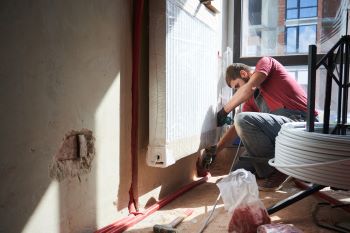
Construction and renovation projects can alter water usage patterns and create conditions that increase Legionella risk.
New pipework, delayed handovers and periods before a building is occupied can also create conditions that need to be considered within your water hygiene strategy. Read our guide on why new buildings can still develop Legionella before occupation to understand the risks associated with commissioning, stagnation and delayed use of new water systems.
Changes in Building Use
Converting offices into residential properties, increasing occupancy levels, or introducing new processes that use water may all require reassessment.
Prolonged Low Occupancy
Periods of reduced building usage can result in stagnant water, creating favourable conditions for Legionella growth.
Evidence of a Potential Problem
If monitoring records indicate temperature control issues, poor water quality, or suspected bacterial contamination, the assessment should be reviewed without delay.
Where temperature monitoring, system condition or other findings indicate a concern, Legionella water sampling may be appropriate as part of a wider investigation. Read our guide to what Legionella water sampling is actually used for to understand when sampling can provide useful evidence and why it should not be treated as a replacement for effective system management.
Do Landlords Need Legionella Risk Assessments More Frequently?

Landlords have a legal responsibility to assess and manage the risk of Legionella within their rental properties.
In most residential settings, a simple risk assessment may be sufficient provided the property has a straightforward water system and the level of risk remains low.
However, landlords should review their assessment whenever:
- There is a change of tenancy
- The water system is modified
- The property becomes vacant for a prolonged period
- Significant defects are identified
For larger residential buildings and Houses in Multiple Occupation (HMOs), more detailed assessments and additional management controls may be required.
Tip for landlords: Even if your rental property appears low risk, you should document your assessment and keep records of any routine monitoring or maintenance carried out on the water system. If a tenant were to become unwell and Legionella was identified as a cause, clear documentation of a proactive approach to risk management is your best defence.
What Happens If an Assessment Is Not Reviewed Regularly?
Failing to keep a Legionella Risk Assessment current can have serious consequences for both the building occupants and the duty holder.
Increased Health Risks
Legionnaires’ disease is a potentially severe form of pneumonia caused by inhaling water droplets containing Legionella bacteria. Certain groups, including older adults and those with underlying health conditions, are particularly vulnerable.
Legal Consequences
If an incident occurs and an organisation cannot demonstrate that risks have been properly assessed and managed, enforcement action may follow.
Financial Costs
Potential consequences include:
- Fines and prosecution
- Remedial work costs
- Business disruption
- Reputational damage
- Increased insurance challenges
Regular reviews help demonstrate ongoing compliance and proactive risk management.
How Can You Tell If Your Current Assessment Is Out of Date?
Your Legionella Risk Assessment may need reviewing if any of the following apply:
- It has not been reviewed in several years
- Water system modifications have been made
- Building occupancy has changed significantly
- Previous recommendations remain outstanding
- Monitoring records highlight recurring issues
- Maintenance documentation is incomplete or inconsistent
If you’re unsure, seeking professional advice can help determine whether a review is necessary.
What Is Included in a Legionella Risk Assessment Review?
A professional review carried out by a qualified water hygiene specialist will typically include:
Water System Condition – Inspectors will assess the current configuration and condition of the water system.
Control Measures – Existing controls such as temperature management, flushing regimes, and maintenance procedures will be evaluated.
Monitoring Records – Temperature checks, inspection reports, maintenance logs, and other supporting documentation will be reviewed.
Risk Profile Changes – Any changes that may affect Legionella risk since the previous assessment will be identified and considered.
Recommendations – The assessor will provide updated guidance on actions required to maintain compliance and reduce risk.
If you would like to understand the practical process in more detail, including what an assessor checks during a site visit, read our guide on what happens at a Legionella Risk Assessment. It explains how specialists review water temperatures, pipework, outlets, storage tanks and potential stagnation points.
Not Sure If Your Legionella Risk Assessment Is Still Valid?
Swiftclean provides Legionella risk assessments, reviews and ongoing water hygiene support for buildings across the UK. If you are unsure whether your current assessment reflects the actual risk in your building, speak to our specialists.
Book a Risk Assessment Call Us: 0800 243 471Can You Carry Out a Legionella Risk Assessment Yourself?
In some low-risk environments, a competent person with appropriate knowledge may be able to complete a Legionella Risk Assessment.
However, many organisations choose to engage specialist assessors to ensure:
- Compliance with current guidance
- Accurate identification of risks
- Practical recommendations
- Comprehensive documentation
Professional assessments can provide greater confidence that risks are being managed effectively.
How Much Does a Legionella Risk Assessment Cost?
Costs vary depending on factors such as:
- Property size
- Number of water systems
- Building complexity
- Risk level
- Location
While cost is an important consideration, it should be weighed against the potentially significant expense of corrective works, enforcement action, and operational disruption resulting from inadequate risk management.
How Swiftclean Can Help
Managing Legionella compliance can be complex, particularly across multiple sites or buildings with extensive water systems. That’s where Swiftclean can help.
Swiftclean has extensive experience delivering Legionella risk management services across a wide range of sectors, including healthcare, education, local government, commercial buildings, residential properties, and industrial facilities.
Our services include:
Legionella Risk Assessments – Comprehensive assessments conducted by experienced specialists to identify risks and provide practical recommendations.
Assessment Reviews and Updates – Regular reviews to ensure your assessment remains current and reflects any changes within your building or water systems.
Water Hygiene Monitoring – Ongoing monitoring programmes designed to support compliance and demonstrate effective risk management.
Remedial Works – Expert support to address issues identified during assessments and inspections.
Nationwide Compliance Support – Whether you’re responsible for a single property or a complex estate, Swiftclean can provide consistent, reliable support tailored to your organisation’s needs.
By partnering with Swiftclean, you can gain confidence that your Legionella management programme remains effective, compliant, and aligned with current best practice.
Conclusion
There is no one-size-fits-all answer to how often a Legionella Risk Assessment should be conducted. While many organisations review assessments every two years, the most important consideration is whether changes have occurred that could impact Legionella risk.
Regular reviews, effective monitoring, and proactive management are essential to protecting building occupants and maintaining compliance. If you’re unsure whether your assessment is still valid, partnering with a specialist provider such as Swiftclean can help ensure your responsibilities are met and your water systems remain safe.
Your Legionella Risk Assessment Questions Answered
Is a Legionella Risk Assessment required every year?
Not necessarily. There is no legal requirement for annual reassessments, although ACOP L8 requires assessments regular reviews are essential to ensure the assessment remains valid.
How long does a Legionella Risk Assessment remain valid?
It remains valid only while the building, water system, and risk profile remain substantially unchanged.
Do small businesses need Legionella Risk Assessments?
Yes. Any business with water systems that could present a Legionella risk must assess and manage that risk appropriately.
Can a Legionella Risk Assessment expire?
There is no formal expiry date, but assessments should be reviewed regularly and updated following significant changes.
Who can carry out a Legionella Risk Assessment?
A competent person with suitable knowledge and experience can conduct an assessment, although many organisations choose specialist providers to ensure compliance and accuracy.