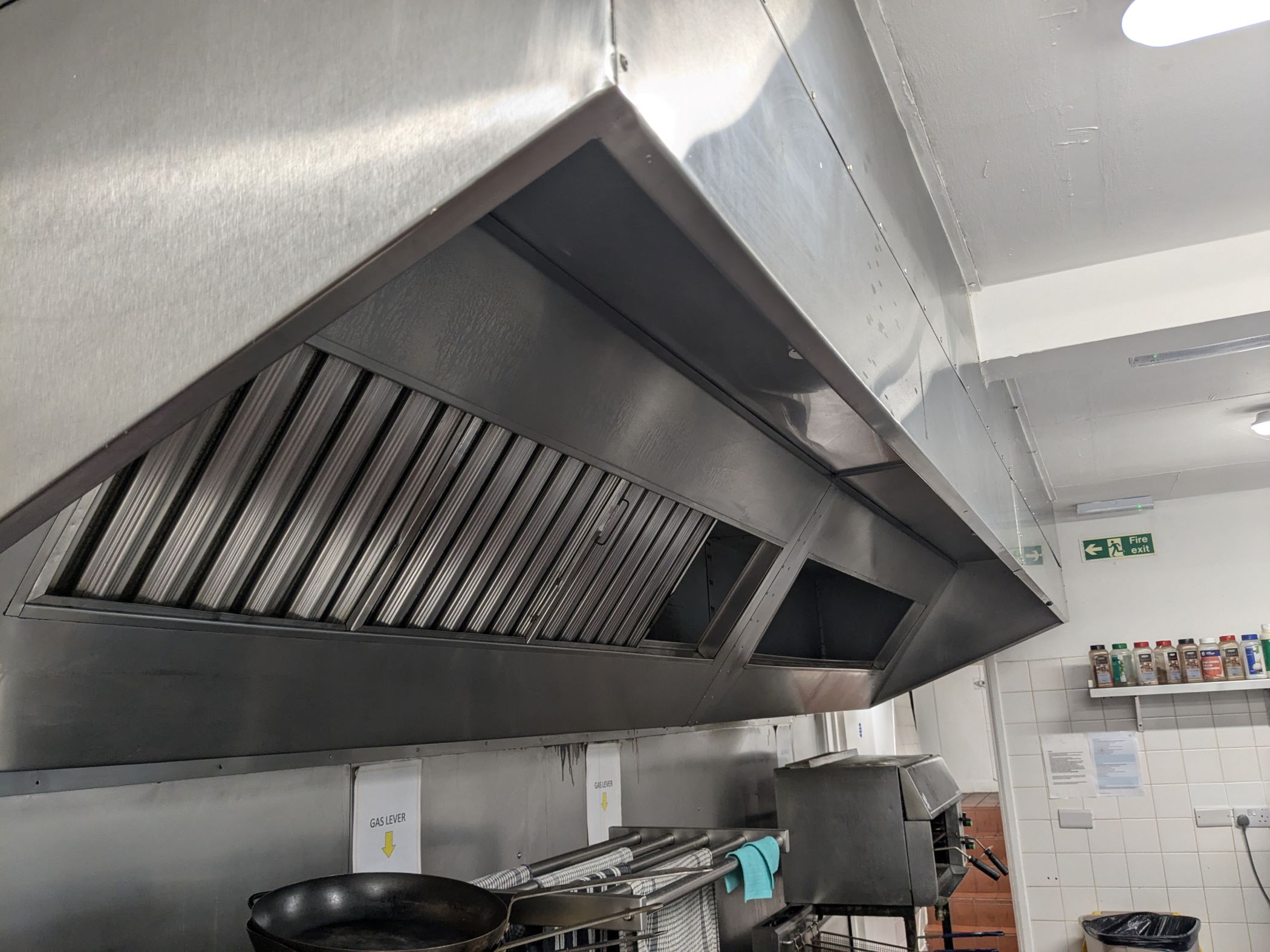
What Does a Professional Kitchen Extract Clean Involve?

This is because a kitchen deep clean and a kitchen extract clean cover two different areas. While both are important, completing one does not automatically mean the other has been done.

What is a Commercial Kitchen Deep Clean?

A kitchen deep clean generally focuses on the visible surfaces and equipment within the kitchen. Depending on the cleaning specification, this may include floors, walls, worktops, appliances, preparation areas and the external surfaces of the kitchen canopy.

Its purpose is to maintain a clean and hygienic working environment.

What is a Kitchen Extract Clean?

A kitchen extract clean focuses on the internal areas of the extract system, the parts that are often difficult to see or access, or impossible to see during everyday kitchen cleaning. An extract system could extract straight from the kitchen; or it could rise up over several floors before extracting above the roof area, with some twists and turns along the way.

At Swiftclean, our standard extract cleaning work begins inside the canopy plenum, behind the filters. From there, we clean the accessible internal components of the system, which may include:

  • The canopy plenum
  • Extract ductwork
  • Internal duct surfaces
  • Access doors and panels
  • Extract fans and fan housings
  • Discharge points and associated components

The exact areas cleaned will depend on the layout, accessibility and condition of the individual system.

In essence, we clean what you can’t see. Depending on the scope of works, the canopy hood itself may be included along with the canopy filters.

Kitchen Deep Clean vs Kitchen Extract Clean

This is one of the most common sources of confusion for commercial kitchen operators, and getting it wrong can leave a serious compliance and fire safety gap in place.

Kitchen Deep Clean Kitchen Extract Clean
What it covers Visible surfaces and equipment within the kitchen Internal components of the extraction system
Primary purpose Maintain kitchen hygiene and food safety standards Remove grease from the extract system to reduce fire risk
Compliance standard Food hygiene regulations BESA TR19 Grease specification
Who carries it out General cleaning contractors Specialist ventilation hygiene contractors
Does one cover the other? No No

A kitchen deep clean typically covers floors, walls, worktops, appliances, preparation areas and the external surfaces of the canopy. Its purpose is to maintain a clean, hygienic working environment for food preparation.

A kitchen extract clean focuses on the internal areas of the extraction system – the parts that are often difficult or impossible to see during everyday kitchen cleaning. The extract system may rise through several floors before discharging above the roof level, with bends, branches and access points along the way. None of those internal surfaces are touched by a standard deep clean.

Book Your Kitchen Extract Clean Today

Keep your kitchen extract system clean, safe and compliant. Speak to the Swiftclean team or request a quotation today.

Contact Us Call Us: 0800 243 471

Why Does the Hidden Extract System Need Cleaning?

As cooking takes place, airborne grease, smoke and other residues are drawn through the canopy and into the extract system. Over time, deposits can accumulate inside the plenum, ductwork and fan, even when the visible canopy and surrounding kitchen appear clean.

This hidden build-up can increase fire risk, restrict airflow and affect the performance of the extract system. Routine cleaning helps businesses manage these risks and demonstrate that their system is being properly maintained.

Fire safety fact: A kitchen that appears clean can still carry a significant fire risk if the internal extract system has not been cleaned. Grease accumulation inside the ductwork and fans is not visible during normal kitchen operations. It builds up gradually and can only be assessed and managed through specialist inspection and cleaning.

What Does a Professional Kitchen Extract Clean Cover?

At Swiftclean, our standard extract cleaning work begins inside the canopy plenum, behind the filters. From there, our engineers clean the accessible internal components of the system throughout its full length.

Depending on the layout, accessibility and condition of the individual system, this may include:

  • The canopy plenum and its internal surfaces
  • Extract ductwork throughout the accessible duct run
  • Internal duct surfaces at all accessible points
  • Access doors and panels
  • Extract fans and fan housings
  • Discharge points and associated components

The exact areas cleaned will depend on the design of the system, the access points available and the condition of the ductwork. In essence, we clean what you cannot see. Depending on the agreed scope of works, the canopy hood itself and the canopy filters may also be included.

Tip: Before booking a kitchen extract clean, ask your contractor to confirm precisely which components are included within the scope of works. A quotation that covers only the canopy and the immediately visible ductwork is not the same as a full extract clean. The scope should be clearly set out in writing before works begin.

Who Should Clean Your Kitchen Extract System?

Kitchen extract cleaning is specialist work and should be completed by properly trained and qualified operatives. The entire accessible system should be cleaned in accordance with BESA’s TR19® Grease specification, or an equivalent recognised standard – not simply the areas that are easiest to reach.

When choosing a contractor, businesses should look for a company registered with BESA’s Ventilation Hygiene Register (VHR). The VHR scheme provides additional assurance that the contractor has demonstrated the required competence, training and ability to complete ventilation hygiene work to recognised industry standards.

Swiftclean is proud to be a founding member of VHR Air, helping clients choose a competent contractor with confidence.

Make Sure You Know What Has Been Cleaned

When arranging kitchen cleaning, always check whether the quotation covers a general deep clean, an internal extract system clean, or both. A clear scope of works helps prevent gaps in maintenance and ensures that the less visible parts of the system are not overlooked.

Swiftclean provides professional kitchen extract cleaning for commercial kitchens across the UK, supported by clear reporting and post-clean verification evidence.

To discuss your kitchen extract system, arrange a survey or add filter cleaning to your service, contact the Swiftclean team today.

What Documentation Should You Receive?

Following a professional kitchen extract clean, you should receive a post-clean verification report that includes:

Document or Evidence Why It Matters
Pre-clean grease thickness measurements Confirms the level of contamination before cleaning began
Post-clean grease thickness measurements Verifies the system has been brought within TR19 Grease standards
Photographic evidence before and after Provides visual confirmation of the work completed at each access point
Details of areas cleaned and access points used Confirms which sections of the system were addressed and which were not accessible
TR19 Grease compliance certificate Formal confirmation that the system meets the required cleanliness standard
Recommendations for remedial works Identifies any areas requiring follow-up action, such as access panel installation or system repairs

This documentation is essential for your compliance records and should be retained and made available to insurers, fire risk assessors and Environmental Health Officers on request.

Ready to Arrange a Kitchen Extract Clean?

Swiftclean provides professional kitchen extract cleaning for commercial kitchens across the UK, carried out to BESA TR19 Grease standards with full post-clean verification documentation. Contact us to discuss your requirements or arrange a survey.

Find Out More Call Us: 0800 243 471

Your Kitchen Extract Cleaning Questions Answered

A kitchen deep clean covers the visible surfaces and equipment within the kitchen, including floors, walls, worktops, appliances and the external surfaces of the canopy. A kitchen extract clean covers the internal areas of the extraction system, including the canopy plenum, ductwork, fans and discharge points. Both are important, but completing one does not mean the other has been carried out. Always check the scope of works before booking.

Under TR19 Grease guidance, cleaning frequency is based on the hours of operation. Heavy-use kitchens operating 12 to 16 hours per day should be cleaned every three months. Moderate-use kitchens operating 6 to 12 hours per day should be cleaned every six months. Light-use kitchens operating 2 to 6 hours per day should be cleaned annually. A site-specific assessment will confirm the appropriate frequency for your operation.

TR19 Grease is the BESA industry specification for managing the fire risks associated with grease accumulation in commercial kitchen extraction systems. It covers inspection, measurement, cleaning and post-clean verification. Cleaning carried out to TR19 Grease standards provides the documented compliance evidence that insurers, fire risk assessors and Environmental Health Officers expect to see.

Most commercial kitchen insurance policies require evidence that the extraction system has been cleaned in line with TR19 Grease guidance at appropriate intervals. Failure to provide this evidence in the event of a fire can result in a claim being rejected, even if a clean has taken place but cannot be evidenced. Always check your policy terms and retain your post-clean verification reports.

Abbey Maxwell

Head of Shared Services for Swiftclean and Swift Fire Compliance - Abbey brings over 14 years of industry experience, progressing from service coordinator to Head of Operations and ultimately Director of Shared Services, overseeing Marketing, HR, and IT. She also serves as vice president of the East Anglia Regional BESA Committee and is an active member of the BESA Council.