Ventilation Cleaning in Distilleries: What Scottish Producers Need to Know
From historic Highland and Speyside distilleries to island sites and modern Lowland facilities, Scotland’s producers operate in buildings of every age and layout. However, they share one challenge: keeping ventilation ductwork clean, accessible and properly maintained.
Malt handling, milling, bottling and general production activity can introduce dust and debris into ventilation systems. Because the build-up is hidden inside the ductwork, problems can easily go unnoticed.
Why is Ventilation Cleaning Important in a Distillery?
Dust, fibres and other deposits can collect inside ductwork over time. This contamination may restrict airflow, contribute to unwanted odours and make ventilation fans work harder.
Grain and malt dust require particular care. The Health and Safety Executive identifies grain as a material capable of creating potentially combustible dust clouds. Ventilation cleaning should therefore support a wider, site-specific approach to controlling dust and managing risk.
View the HSE’s combustible dust guidance
What Areas of a Distillery May Require Ventilation Cleaning?
Ventilation systems may serve:
- Malt and grain handling areas
- Production and bottling facilities
- Warehouses and plant rooms
- Offices and staff areas
- Visitor centres, shops and tasting rooms
- Commercial kitchens and hospitality spaces
Historic and extended distillery buildings can contain complex ductwork installed or adapted over many years. An internal inspection is often the only reliable way to establish its condition.
Is Your Distillery Ventilation System Compliant?
Contact Swiftclean or use our free compliance checker to review your ventilation requirements.
Contact Us Today Check Your Distillery’s ComplianceWhy Are Access Doors Important?
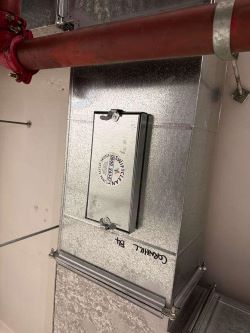
Access doors allow specialist operatives to reach inside ductwork for both inspection and cleaning. Without enough correctly positioned access points, or sufficient size and orientation, it may be impossible to clean the complete system.
Look along your ductwork: can you see access doors at suitable points? If there are none (or only one or two across an extensive system), it is a significant warning sign. Large sections may never have received a full clean.
A system without adequate access is unlikely to be capable of being fully cleaned and verified in line with recognised ventilation hygiene good practice. Cleaning around grilles or removing visible surface dust is not the same as cleaning the entire system.
Swiftclean can identify where access is insufficient and install suitable access doors before cleaning begins.
Read our blog, The Importance of the Right Access Door, to learn more about choosing and positioning access doors for effective ductwork cleaning.
Swiftclean Tip: Before arranging a full ventilation clean, check whether your ductwork has enough access doors for specialist operatives to reach all sections of the system. If access is limited, additional doors may need to be installed before cleaning begins.
What Does Professional Ventilation Duct Cleaning Involve?
The work normally begins with an assessment of the system’s condition, layout and accessibility. Specialist equipment is then used to remove deposits from internal surfaces and associated components.
All work must be planned around the particular risks, production requirements and restricted areas of the distillery.
What is TR19 Air?

TR19 Air is BESA’s recognised specification for the internal cleanliness and hygiene management of ventilation systems. It provides a framework for assessing, cleaning and reporting on ventilation ductwork.
Following this recognised good practice helps distilleries demonstrate the condition of their systems and maintain evidence of completed cleaning.
For more information about recognised ventilation hygiene standards, learn more about TR19 Air.
Read our blog, How Do HTM Requirements and BESA TR19 Work Together?, to learn more about how HTM guidance and BESA TR19 work together to support effective ventilation hygiene and compliance.
Do Distillery LEV Systems Also Need Cleaning?
Yes. Local exhaust ventilation, or LEV, is used to capture airborne contaminants close to where they are produced. Accumulated deposits and blockages can reduce its effectiveness, so appropriate cleaning may be required alongside maintenance and testing.
For distilleries with LEV systems, read more about local exhaust ventilation cleaning and testing.
The HSE states that LEV systems should generally receive a thorough examination and test at least every 14 months, although some processes require more frequent testing.
If you are unsure whether your ventilation system requires attention, use Swiftclean’s ventilation compliance checker.
Can Cleaning be Arranged Around Distillery Production?
Yes. Swiftclean can plan ventilation cleaning around maintenance shutdowns, production schedules and visitor opening hours. Out-of-hours working can also be arranged to minimise disruption.
We provide specialist ventilation cleaning across Scotland, including support for historic, rural and island distillery sites. Other services can also be combined into a packaged compliance programme, including:
- LEV cleaning and testing
- TR19 Grease kitchen extract cleaning
- Legionella control and water hygiene
- Fire and smoke damper testing and remedials
When Should a Scottish Distillery Arrange an Inspection?
It may be time to assess your ventilation system if there is no recent inspection or cleaning record, few or no access doors are visible, airflow appears to have reduced, dust or debris is appearing around grilles, parts of the system have never been internally inspected and/or the building or ventilation system has been altered.
Swiftclean can inspect your ductwork, install the required access doors, complete specialist cleaning and provide clear evidence of the work undertaken.
To discuss ventilation cleaning for a distillery anywhere in Scotland, contact the Swiftclean team today.
Need Ventilation Cleaning for Your Distillery?
Swiftclean can inspect, clean and improve access to ventilation systems across Scotland, including historic, rural and island distillery sites. We can plan work around production, maintenance shutdowns and visitor opening hours.
Call Us: 0800 243 471 Contact Our Team


