Clearing the Air in Hospitals…
Air and Water Hygiene Services for Hospitals: Part One
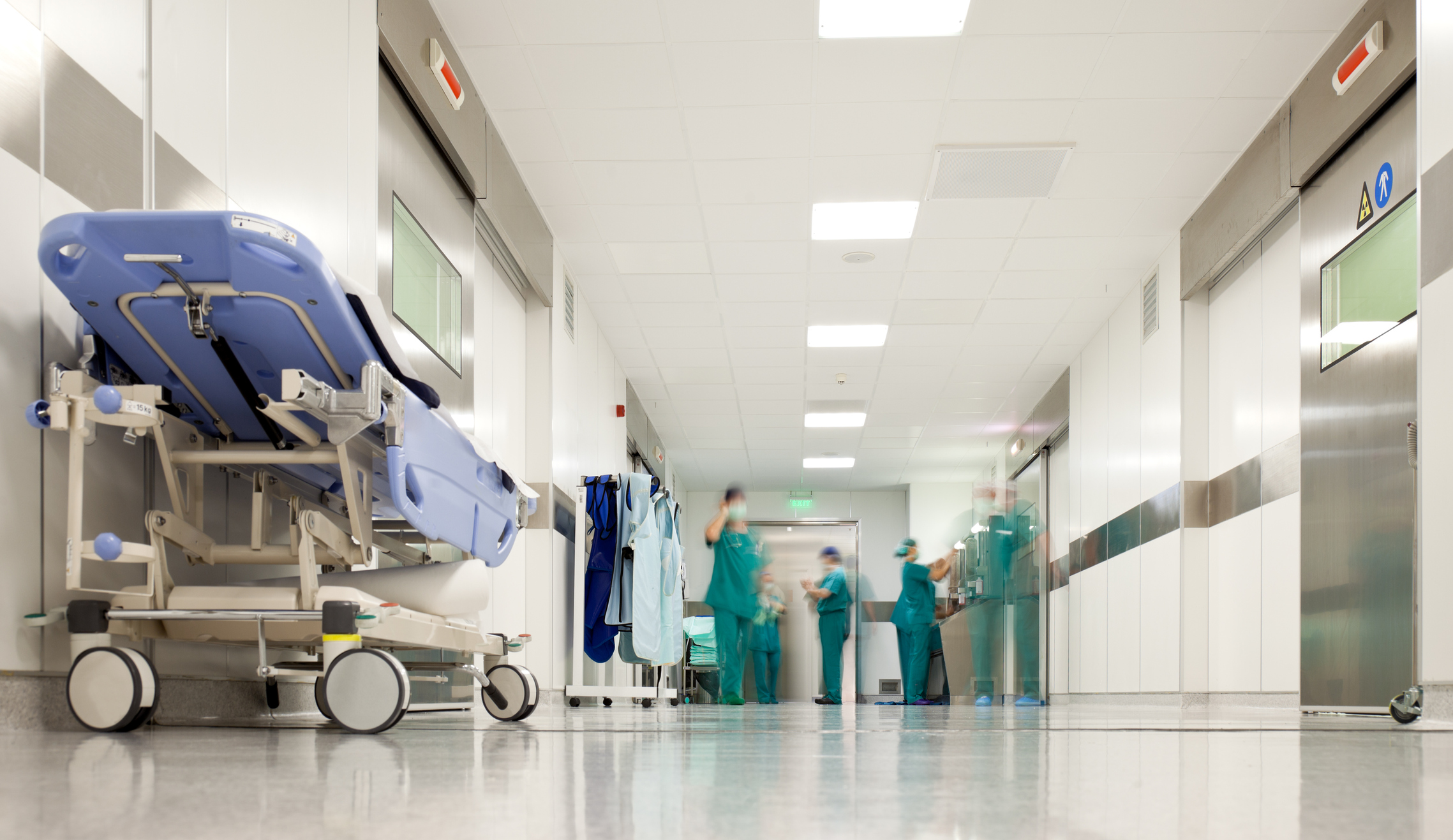
Our teams of expert technicians often work out of hours to deliver services without interrupting the routine of the day, but that’s rarely an option in hospitals. When there’s never a time when the building isn’t actively used by patients and staff, as well as accommodating family and friends during visiting hours, just how do we provide these vital services?
Fitting Ventilation Ductwork Cleaning Around Complex Routines

Sometimes, there is no out of hours. The care of patients never stops, so we have to be creative about how we carry out our specialist cleaning tasks. In some areas, such as outpatient facilities and operating theatres, there is more downtime, so we can use our usual routine of cleaning ductwork during evenings and overnight.
However, we still need to be flexible, factor in the possibility of emergency surgeries and private appointments for which facilities may be used at weekends or in expanded hours. This is why, in hospital contracts, we work very closely indeed with facilities managers and often liaise with patient-focused teams to make sure that our services are delivered with a minimum of disruption.
Classification of Ventilation Ductwork
In accordance with BESA specification TR19®Air, which our experts helped to draft, ductwork systems should be classified as high, medium or low, according to their location and usage. This is particularly important in hospitals.
Operating theatres and research laboratories will be classified as high, as they will often include HEPA filters to help guarantee a very high indoor air quality and form part of essential infection control measures. Ventilation ductwork systems in most other parts of the hospital – such as wards, consulting rooms, administrative offices, and retail and catering outlets – will be classified as medium, helping to provide good indoor air quality and sufficient air changes for a healthy indoor atmosphere. Less frequented areas such as boiler rooms will be classified as low.
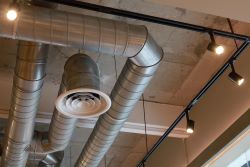
Despite their classification, every inch of ductwork in every hospital is treated with the same meticulous care, with every particle of dust, dirt or fibre being removed. The practical difference between the classifications is the frequency at which they are thoroughly cleaned; and this is laid out in tables in TR19®Air. We can help facilities managers establish cleaning routines to ensure that appropriate time frames are adhered to, and we will remind them when ventilation cleaning is due, so that it can be carefully scheduled.
For best practice, hospitals also need to follow HTM guidance from NHS England. HTM 03-01 is for specialised ventilation and emphasises the role of ventilation in infection prevention and control.
Ventilation Cleaning in Safe Hands
Hospitals are sensitive locations, in which patients can be vulnerable; that’s why all our technicians are DBS checked before beginning their employment with us. We have strict safety protocols of our own, but when working in hospitals, we ensure that we adhere to the hospital’s own safety policies, so that our technicians, our clients and the hospital’s patients can all be assured of everyone’s safety.
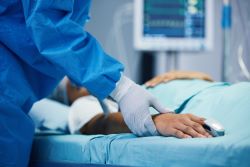
When we are required to work on active wards, we liaise closely with a hospital’s multi-discipline team to create a schedule of cleaning ductwork in one patient bay at a time, closing the bay for a minimal amount of time before moving on to the next one. This minimises the restriction of access for hospital beds to as few as possible, for as little time as possible.
The bay being actively cleaned will be carefully screened off to ensure that there is no airborne transference of dirt or dust from newly cleaned ductwork to other parts of the ward. This bay can itself then be cleaned by the hospital’s own cleaning team before patients are moved back in.
Frequently Asked Questions About Ventilation Ductwork
How can ventilation ductwork cleaning be carried out in hospitals that operate 24/7 without disrupting patient care?
In healthcare environments where services run continuously, maintenance work is planned in close coordination with estates and clinical teams to fit around care delivery. Tasks are phased so that only small sections are worked on at any one time, allowing departments to remain operational. Where possible, work is aligned with quieter periods, but teams remain adaptable to sudden changes such as urgent procedures. This careful planning ensures essential hygiene work is completed while maintaining access, comfort, and safety for patients and staff.
What is TR19®Air, and how does it apply to ventilation ductwork cleaning in hospitals?
TR19®Air is an industry-recognised framework that sets out best practice for maintaining air conveyance systems. In healthcare buildings, it helps determine how different areas should be assessed based on how they are used and the level of cleanliness required. This guidance defines appropriate inspection and maintenance intervals, supporting hospitals in meeting regulatory expectations, maintaining air quality, and demonstrating due diligence in a highly controlled environment.
What safety and infection control measures are in place when cleaning ventilation systems in active hospital areas?
When work takes place near patients or clinical activity, strict containment and control procedures are followed to prevent any spread of airborne particles. Areas being worked on are temporarily isolated, and cleaning is completed methodically before being handed back for routine environmental cleaning. Personnel are vetted and trained to work in sensitive settings, and all activity is carried out in line with site-specific protocols to protect patients, staff, and visitors at all times.
Breathing More Easily
Clean ventilation ductwork helps to provide good indoor air quality, which has long been recognised as an important element in patient recovery. As well as aiding patient health and wellbeing, our ductwork services also include an important fire prevention measure – fire damper testing. Our next blog will tell you more about fire damper testing, and the vital role that our teams play in keeping patients, medical staff, administrators and visitors safe in hospital.