
Working in High-Security Sites: Challenges, Risks and Solutions
Operating within high‑security sites brings a unique set of challenges that go far beyond standard working practices. From strict access controls to unpredictable operational changes, success depends on preparation, flexibility and clear communication. Below, we explore some of the key considerations when working in secure environments such as military barracks, prisons and airports – and how these challenges can be effectively managed.
Understanding Security Clearance Roles
Before any work can begin on a high‑security site, it’s essential to understand the structure of security clearance and responsibility.
Signatories vs Nominated Officers
A nominated officer holds a higher level of authority than a signatory. While signatories are authorised to approve certain actions or documents, nominated officers oversee accountability at a broader level and are ultimately responsible for compliance. This distinction is critical when managing approvals, access requests and ongoing site activities.
Access, Passes and Restricted Areas
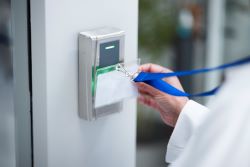
Generating Security Passes
Access to secure environments is tightly controlled, and the process for issuing passes can be time‑consuming. Accurate documentation, consistent tracking and proactive renewals are essential to avoid delays.
Airside Passes
Airside passes, in particular, require ongoing management. At airports, passes can become “parked” if they haven’t been used within a specific timeframe. This means engineers may need to visit a site purely to swipe in, even if no immediate work is planned, to keep access active.
If a pass hasn’t been used for:
Up to 6 months: the engineer must go through the GSAT (General Security Awareness Training) process again.
More than 6 months: the entire pass application process must be restarted from scratch.
Working in Restricted Areas
Many high‑security environments involve restricted or sensitive zones. Engineers and contractors must be fully briefed on where they can and cannot go, often working under escort and adhering to strict protocols at all times.
Non‑Disclosure Agreements and Confidentiality
Non‑disclosure contracts are standard practice. Confidentiality is not optional – it underpins trust and ensures compliance with legal, operational and national security requirements.
Site‑Specific Challenges
Military Barracks
Military sites present a distinct operational challenge. These are live environments where personnel don’t just work – they live on site.
Sudden deployments may require immediate access to buildings and equipment.
Work schedules must remain flexible to accommodate operational priorities.
Having a fallback working area is essential, ensuring work can continue without disrupting military activity or requiring contractors to leave site unnecessarily.
Above all, continuous communication with the client is critical to adapt quickly to changing circumstances.

Prisons
Prison environments are highly controlled and can change at short notice.
Lockdowns can occur without warning, significantly impacting planned work.
Flexibility in scheduling and contingency planning is essential.
Teams must be prepared for stop‑start working patterns and strict supervision requirements.
Airports
Airports are among the most complex high‑security environments to operate in due to their constant movement and tight operational windows.
Commercial units may not close until the final flight arrives – often later than planned.
Delays can reduce working windows by two to three hours, as sites must still reopen at their usual time.
Night‑time work is often the only option, increasing pressure on coordination, access and logistics.
Effective planning and close coordination with airport authorities are vital to ensure work is completed safely and on time.
The Key to Success: Planning, Flexibility and Communication

Across all high‑security sites, the common thread is the need for meticulous planning combined with genuine flexibility. Access requirements, working windows and client priorities can change rapidly. Organisations that succeed in these environments are those that:
- Understand security processes in detail
- Keep access and training fully up to date
- Maintain open and consistent communication with clients
- Build contingency plans into every project
Working in high‑security environments is demanding, but with the right systems and mindset in place, it’s possible to deliver consistently while respecting the unique constraints of these critical sites.
FAQs: Working in High-Security Sites
What are the main challenges of working in high-security sites?
High-security environments present challenges such as strict access controls, limited working windows, security clearances, and unpredictable operational changes. Effective planning and flexibility are essential to ensure work can be completed safely and efficiently.
Why is security clearance important for contractors?
Security clearance ensures that only authorised individuals can access sensitive areas. Understanding roles such as nominated officers and signatories helps streamline approvals and ensures compliance with site regulations.
How can contractors minimise disruption in high-security environments?
Contractors can minimise disruption by planning work around operational schedules, maintaining up-to-date access permissions, communicating closely with site management, and building contingency plans to handle unexpected delays.
Trusted Compliance for High-Security Environments
When it comes to high-security sites, you need a partner you can rely on. With over 40 years of experience, Swiftclean supports some of the UK’s most sensitive environments, including MOD sites, prisons, data centres and airports, delivering safe, compliant services with complete professionalism.
Our teams are fully vetted, work closely with site security and FM teams, and follow strict protocols to ensure every job is carried out efficiently and without compromise.
Need a trusted compliance partner? Get in touch with Swiftclean today!