Legionella Compliance Myths We Hear Every Week
Separating Fact from Fiction in Legionella Control!
When it comes to Legionella compliance, misinformation is surprisingly common. Many organisations unknowingly rely on outdated advice or assumptions that could leave them vulnerable to both health risks and regulatory non-compliance.
The Health and Safety Executive’s Approved Code of Practice (ACoP L8) – Legionnaires’ Disease: The Control of Legionella Bacteria in Water Systems sets out the duties of employers and those responsible for premises to identify, assess, and manage Legionella risks. Yet despite the guidance being well established, we still hear the same myths time and time again.
Unsure whether your assessment still reflects your building? Speak to Swiftclean about reviewing your Legionella management arrangements.
Book a CallMyth 1: “We only need a risk assessment every two years.”
The reality: ACoP L8 does not specify that a risk assessment should simply be carried out every two years and forgotten about.

Instead, risk assessments should be reviewed regularly and a new risk assessment carried out whenever there is reason to believe they are no longer valid. Changes to building occupancy, alterations to water systems, changes in water usage patterns, or evidence that control measures are no longer effective can all trigger the need for a review.
A Legionella risk assessment should be treated as a living document, not a box-ticking exercise.
For more information on review intervals and changes that may require action, read our guide to how often a Legionella risk assessment should be reviewed.
Myth 2: “We don’t need testing because we monitor temperatures.”
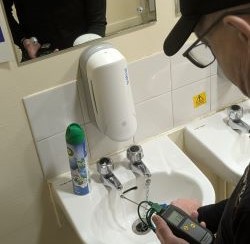
The reality: Temperature monitoring is one of the most important control measures recommended within ACoP L8, but it should not be viewed as the only control measure.
Legionella can be influenced by several factors, including water stagnation, biofilm growth, scale build-up, and system design. While temperature checks are the primary control measure, it is also good practice to implement a sampling plan to ensure control measures are adequate and are controlling the risk and ensuring complete system health.
An effective Legionella management programme combines monitoring, maintenance, inspection, cleaning, and where appropriate, microbiological testing.
Swiftclean Tip: Ask what the evidence tells you. Review monitoring results, inspection findings and outstanding actions together. No single temperature reading, water sample or report provides the complete picture.
Myth 3: “Legionella only affects large buildings.”

The reality: Legionella bacteria do not distinguish between large and small premises.
While outbreaks often make headlines when linked to hospitals or hotels, ACoP L8 applies to a wide variety of properties, including offices, schools, care homes, leisure centres, retail units, and smaller commercial buildings.
If a building contains a water system, it also has the potential to support bacterial growth if it is not properly managed. Many water systems can generate inhalable water droplets, creating conditions in which Legionella bacteria may proliferate. As a result, these systems require appropriate management and control measures.
For background on how bacteria enter water systems, read how Legionella gets into a building.
Myth 4: “New buildings can’t have Legionella risks.”

The reality: New buildings can develop Legionella risks from day one.
Water systems that remain stagnant during construction, delays in occupation, poor commissioning practices, or inadequate flushing programmes can all create conditions that encourage bacterial growth.
ACoP L8 requires duty holders to consider Legionella risks regardless of the age of the building. A modern water system still requires proper management to remain safe.
The Importance of Following ACoP L8
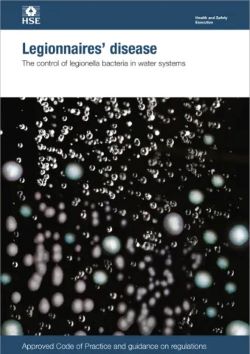
The purpose of ACoP L8 is not simply to achieve compliance; it is to protect people from a potentially serious and sometimes fatal disease.
Duty holders are responsible for ensuring suitable risk assessments are carried out, control measures are implemented, monitoring is undertaken, and records are maintained. Following the guidance helps demonstrate that reasonable steps have been taken to manage Legionella risks effectively.
Don’t Let Myths Drive Your Compliance
Legionella control should be based on evidence, risk assessment, and recognised guidance, not assumptions or industry hearsay.
By following ACoP L8 and maintaining a proactive water hygiene programme, organisations can protect occupants, satisfy legal obligations, and reduce the likelihood of costly remedial action in the future.
Unsure whether your current Legionella management programme meets ACoP L8 requirements? A professional review can help identify gaps, strengthen compliance, and ensure your water systems remain safe, efficient, and fully compliant.
Replace Legionella Assumptions with a Clear Plan
Not sure whether your risk assessment, monitoring or testing arrangements are appropriate? Speak to Swiftclean about your water system and the next steps for managing Legionella risks.
Legionella Compliance FAQs
Do small buildings need a Legionella risk assessment?
Building size alone does not determine the need to assess Legionella risks. Employers and those responsible for premises should consider their water systems, how they are used and the potential for exposure. A simple, low-risk system may need straightforward controls rather than an extensive testing programme.
Can new buildings have Legionella risks?
Yes. A new building is not automatically free from Legionella risks. Its water system still needs an appropriate assessment, clearly assigned responsibilities and suitable controls. Areas that remain unoccupied or outlets that receive little use should be considered as part of the assessment.
Who is responsible for managing Legionella risks in a building?
The employer or person in control of the premises, the dutyholder, is responsible for ensuring Legionella risks are assessed and managed. They should appoint a competent responsible person with the knowledge, skills and authority to oversee the control measures. External specialists can provide support, but appointing a contractor does not remove the dutyholder’s responsibilities
What records should a Legionella management programme include?
Records should include the risk assessment findings, named responsible people, the written control scheme and details of how it is implemented. Keep dated monitoring results, inspection reports, test results and maintenance records, together with evidence of action taken to address problems. HSE advises retaining assessment and control-scheme records while current and for at least two years afterwards, and monitoring, inspection, test and check records for at least five years.