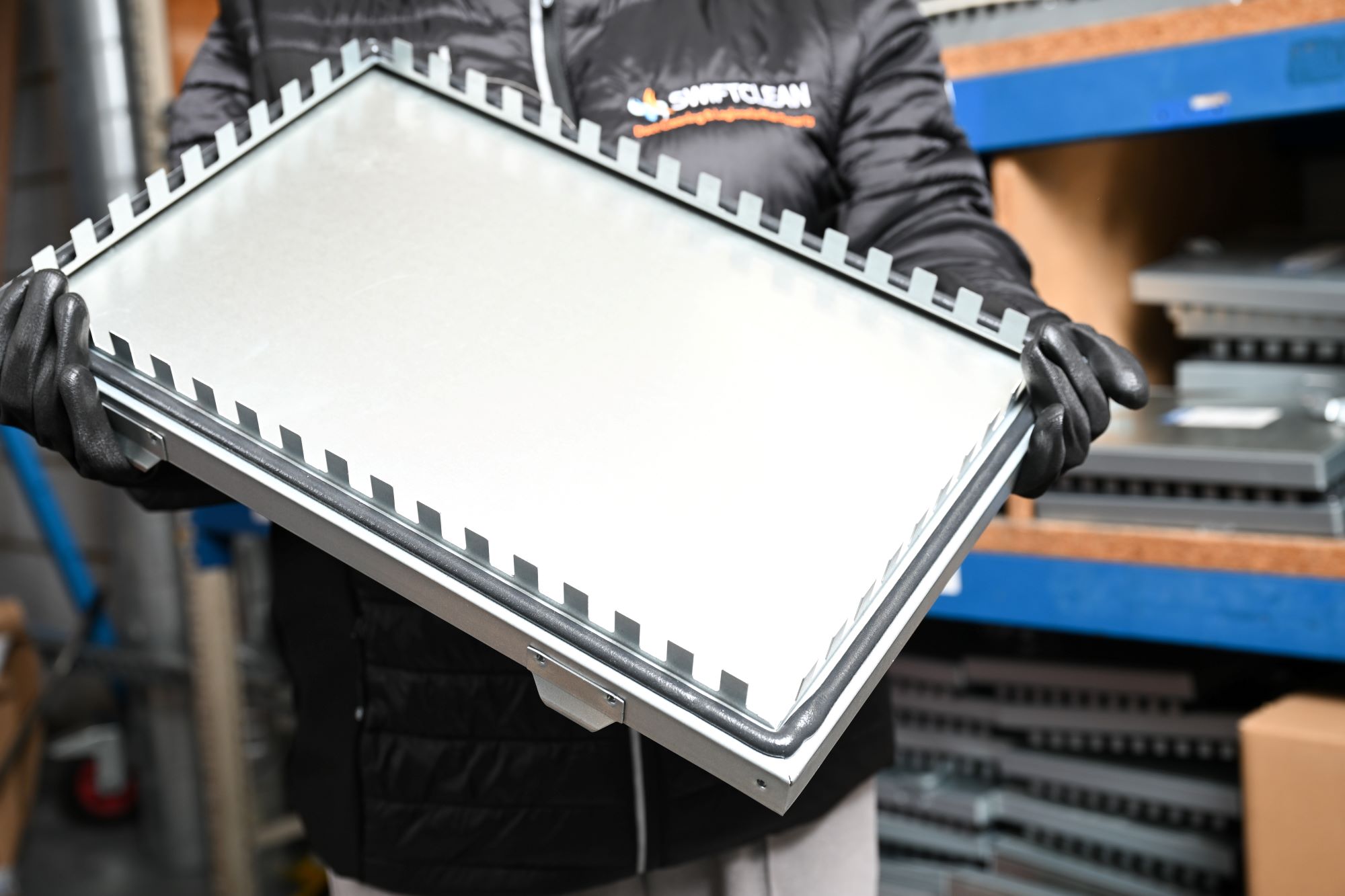
Access Doors in Ductwork: Use and Operation Guide
Understanding Access Doors in Ductwork and How to Operate Them Correctly
Access doors are a fundamental part of any ductwork system, yet their importance is often underestimated. In this blog and accompanying video, Richard Crews, Head of Training at Swiftclean Academy, explains the purpose of access doors, their key features, and how to correctly operate a four-lever cam access door.
What Is the Purpose of an Access Door?
Access doors are installed within ductwork systems to allow safe entry for inspection, cleaning, maintenance, and testing.
Without properly positioned access doors, it is not possible to effectively maintain ventilation systems or demonstrate compliance with industry guidance such as TR19® Grease in Kitchen Extract Systems, and TR19 Air in ventilation systems.
They play a crucial role in ensuring systems remain hygienic, efficient, and safe to operate.
Key Features of an Access Door
Understanding the components of an access door is essential for correct use and maintenance:
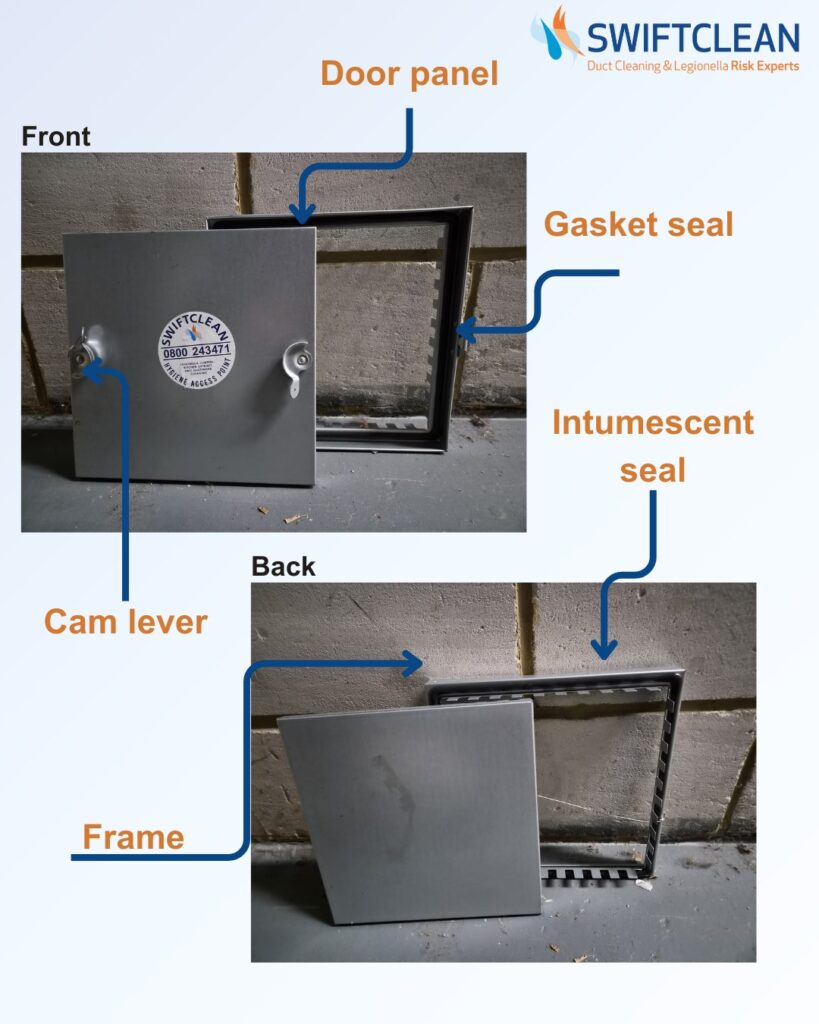
- Door panel: The removable section, typically made from galvanised steel to match the ductwork
- Frame: Fixed to the duct, providing structure and ensuring correct positioning
- Gasket seal: Creates an airtight seal when the door is closed, preventing leakage
- Intumescent seal: Expands under high temperatures to help maintain fire integrity
- Cam levers: Secure the panel in place by applying even pressure to the seals
Each of these elements contributes to both system performance and fire safety.
How to Open a Four-Lever Cam Access Door
Correct operation is essential to avoid damage and maintain the integrity of the system.
To open the door, each cam lever should be rotated a quarter turn anti-clockwise by hand. The levers should be released evenly, rather than fully loosening one side at a time.
Once all levers are disengaged, the panel can be carefully removed.
How to Close and Secure the Access Door
When refitting the panel, it’s important to ensure it is seated correctly within the frame and that both the gasket and intumescent seals are evenly positioned.
The cam levers should then be tightened in a diagonal sequence to apply even pressure across the panel. This helps achieve a consistent airtight seal without distorting the door.
Overtightening should be avoided, as it can damage components and reduce effectiveness over time.
Why Proper Access Door Use Matters for Compliance
Access doors are essential for demonstrating compliance with ventilation hygiene standards. Without them, systems cannot be properly inspected or cleaned, increasing the risk of:
- Reduced airflow and system efficiency
- Fire risk from grease or dust build-up
- Failure to meet TR19® Grease and TR19® Air requirements
- Issues during audits, inspections, or insurance reviews
FAQs: Access Doors in Ductwork Systems
1. Why are access doors important in ductwork systems?
Access doors allow engineers to inspect, clean, and maintain ductwork systems safely. Without them, it is not possible to carry out essential maintenance or demonstrate compliance with the TR19® Grease and TR19® Air specifications.
2. How often should ductwork be accessed for inspection or cleaning?
The frequency depends on system use and environment. High-use systems, such as kitchen extract ventilation, may require more frequent inspection and cleaning to BESA TR19 Grease, while general ventilation systems should be checked in line with the BESA TR19® Air specification.
3. What happens if access doors are not used or maintained properly?
Improper use or damaged access doors can lead to air leakage, reduced system efficiency, and compromised fire safety. It may also result in non-compliance with industry standards and potential issues during audits or insurance inspections.
Summary
Access doors are more than just an entry point – they are a critical component in maintaining safe, compliant, and efficient ductwork systems. By understanding their features and using them correctly, engineers can ensure both performance and safety standards are consistently met.
For further advice or support, please contact Swiftclean on 0800 243 471, info@swiftclean.co.uk or via our website form