Insurance Renewal: Is your Compliance documentation defensible if there is a fire in your kitchen?
Commercial buildings insurance renewal is no longer a routine exercise; it has become a compliance checkpoint, and this is the reason why you shouldn’t blindly renew your insurance. Insurers are placing increasing emphasis on documented evidence that fire and ventilation risks are being properly managed in line with recognised standards.
Why Insurance Renewal Is a Critical Compliance Checkpoint
Unfortunately, for many businesses, building and contents insurance renewal is treated as a routine administrative task; they review the premium, confirm the details, and move on – and this approach can sometimes sadly mean they end up paying the cost if they are exposed to significant risk. Increasingly, due to losses, insurers are tightening their expectations around compliance, particularly when it comes to fire safety and ventilation hygiene.
Failing to meet these requirements does not just create operational risk; it can directly affect the outcome of a claim.
Why Fire Risk in Commercial Kitchens Cannot Be Ignored
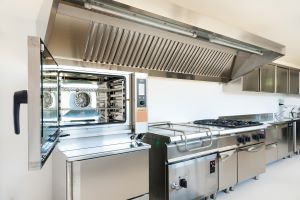
Commercial kitchens are an integral part of many businesses, ranging from restaurants, hotels and cafes to pubs, garden centres, service station catering, event venues and workplace canteens. Even a limited kitchen shutdown can have a significant impact on the ability of a business to continue trading, with resultant loss of trade and associated income, as well as posing the potential to cause catastrophic damage to the building and longer-term closures.
The potential for significant loss can be reduced by implementing a Risk Management Programme to minimise the potential hazards. A designated person or team should oversee the programme to ensure all aspects are properly managed, and any required corrective action is implemented without delay
Common Compliance Gaps That Put Insurance Claims at Risk
Industry data continues to reinforce the shift of expectation towards compliance and robust risk management. It is widely reported that up to 25% of commercial kitchen fires are linked to poorly maintained extract systems, and insurers are increasingly requesting evidence that cleaning has been completed to recognised standards following fire-related incidents. Where documentation is incomplete, unclear, or not aligned to the required standard, claim settlements can be delayed, reduced, or even in some cases, declined.
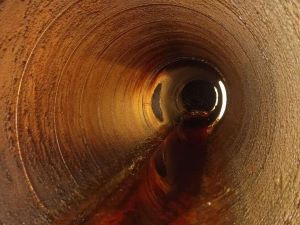
A critical factor is not simply whether cleaning has taken place, but whether the work can be demonstrated as being compliant. For kitchen extract systems, insurers commonly expect evidence that cleaning has been carried out in accordance with the specification TR19® Grease, including confirmation that the full system (not just accessible sections) has been cleaned and that post-clean grease levels have been measured and verified, using photographic evidence. The report should clearly document the condition of the system, and include certification confirming compliance with the relevant standard.
To be fully compliant to TR19®Grease, each post clean report will be registered on the BESCA Vent Hygiene Register (VHR), or equivalent recognised scheme.
The same principle applies to ventilation and ductwork systems under TR19®Air. Insurers are increasingly focused on measurable cleanliness levels with photographic evidence recorded, defined cleaning methodologies, schematic drawings of systems cleaned and formal certification that demonstrates the system has been cleaned to the required benchmark. A generic statement such as ‘system cleaned’ is rarely sufficient to evidence compliance if scrutiny occurs.
Can Your Compliance Documentation Withstand Insurer Scrutiny?
Many businesses only identify gaps in their compliance position during insurance renewal or after an incident has occurred. Common issues include: reports that are uncertified, lacking or missing measurable data, incomplete system coverage, or documentation that does not clearly reference the applicable standard. In some cases, contractors may carry out cleaning work competently but fail to produce the level of certification and verification that insurers expect to see.
From a risk management perspective, the question for businesses or landlords at renewal is straightforward: can your documentation withstand insurer scrutiny? If the evidence cannot clearly demonstrate that systems have been cleaned, measured, and certified to the appropriate standard, the compliance position may not be defensible.
Insurance policies are conditional on compliance, and post-clean verification documentation is the mechanism through which compliance is proven. Reviewing contractor reports before renewal, rather than after an incident, remains one of the most practical steps a business can take to protect both its cover and its operations.
Gary Nicholls, Managing Director of Swift Fire Compliance (Swiftclean (UK) Ltd) and recognised expert witness for legal disputes associated with kitchen extraction system fires, stated:
“Over the years I have seen the evidence of many situations post fire which is woefully short of what is expected by the TR19 ®Grease specification and its predecessors. Expecting insurers to carry the risk of a lack of evidenced fire risk control is like leaving your car keys in the ignition and expecting them to pay if the car is stolen. We all have a duty of care to minimise risk for the insurers that protect us.“
FAQs
Why Choose Swiftclean for Kitchen Extract Cleaning?
Swiftclean is one of the UK’s longest-serving kitchen extract cleaning providers, with over 40 years of experience. We are the only company recommended by AXA Insurance for kitchen extract fire safety cleaning, a distinction we take great pride in. Our directors contributed to the BESA TR19®Grease specification, ensuring you work with experts who helped create the compliance standard.
We employ and train our own operatives across the UK, guaranteeing consistent and expert service without subcontractors. Every clean includes a detailed post-clean compliance report with essential documentation for insurer scrutiny, fire authority inspections, and third-party audits.
What should be included in a Post Clean Verification Report?
A TR19® Grease Compliant Post Clean Report should include the following:
To comply with the BESCA Vent Hygiene Register (VHR) a post-clean report must fully comply with the above, and the required site details shall be uploaded to the BESCA portal by the cleaning contractor.
An executive summary page that highlights the following key risks:
- A clear statement (yes or no) indicating whether or not the system was cleaned in its entirety.
- If no to the above question, state precisely what wasn’t cleaned and why not together with suggested solutions and recommendations.
- A recommendation of cleaning frequency based on the pre-clean Grease Thickness Test readings.
- Micron readings for the stipulated test locations. The mean (average) micron reading across all micron readings taken.
- Other hazards that have been identified.
- Pre-agreement with a client of a specific section or area that is not to be cleaned.
- A sufficient number of photographs of the system taken before and after cleaning that are representative of the system condition.
- A schematic diagram or, as-installed drawing of the system layout showing the system in its entirety