Garden Centre Air Safety: Ventilation & Extract Compliance Explained
As the warmer months arrive and customers flock back to their gardens, garden centres across the UK become bustling hubs of activity. No longer simple plant retailers, they now offer cafés, restaurants, play areas, indoor retail spaces, pet zones, and even leisure attractions. With this evolution comes greater responsibility – particularly around air quality and fire prevention.
Swiftclean supports garden centres nationwide with specialist compliance services designed to protect visitors, employees, and facilities. This blog explores the essential compliance measures garden centres must prioritise today, along with the key UK legislation governing air hygiene.
1. Kitchen Extract & Ventilation Compliance: Reducing Fire Risk
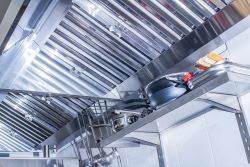
With an estimated 1,500 – 2,300 dedicated garden centres across the UK, and around 70 – 80% offering cafés or food services, effective kitchen extract management has become essential. These dining areas are now central to the garden centre experience, and with grease‑laden ductwork posing a well‑known fire risk, operators are under increasing regulatory pressure to keep systems properly maintained.
Legal Duties:
Industry Standard:
- TR19® Grease
While not legislation, this specification is the UK’s accepted industry benchmark for kitchen extract cleanliness and is used by insurers, fire officers, and environmental health teams when assessing compliance.
Failure to maintain systems to this specification can lead to enforcement notices, invalidated insurance, or even closure. Swiftclean’s extract cleaning services help ensure garden centre kitchens meet the expectations of both regulators and insurers.
2. Tumble Drier Safety: Preventing Lint‑Related Fire Hazards
With many garden centres operating cafés, restaurants, pet areas, or plant nurseries, on‑site laundry facilities are increasingly common. Towels, staff uniforms, pet bedding, and cleaning materials often go through tumble driers daily. While convenient, tumble driers present a significant fire risk when not properly maintained – particularly due to lint build‑up, restricted airflow, or poorly cleaned ducting.

Why Tumble Driers Pose a Fire Risk
Tumble dryers generate heat and rely on strong airflow to operate safely. When lint accumulates inside the machine, filters, or exhaust ducting, it becomes a highly combustible material. Combined with sustained heat, this can ignite quickly and spread through the laundry area. Garden centres with high laundry throughput – for example, those with cafés or pet zones – are at an even higher risk.
Legal Duties
• Regulatory Reform (Fire Safety) Order 2005
Requires a suitable and sufficient fire risk assessment, covering equipment such as tumble driers that may present an ignition hazard.
• Health and Safety at Work etc. Act 1974
Requires operators to manage workplace risks and maintain equipment in a safe condition.
• Provision and Use of Work Equipment Regulations (PUWER) 1998
Mandates safe use and maintenance of machinery, including routine cleaning and inspection of tumble dryers.
Best Practice Standards to Follow
Although no single British Standard is dedicated exclusively to tumble driers, the ductwork extract is covered in the BESA specification TR19 Air and the following best‑practice measures are widely expected:
- Daily – Clean lint filters before and after every use
- Check for any signs of overheating or burning smells
- Weekly / Monthly – Inspect and clean exhaust ducting
- Ensure airflow is unobstructed and that vents are undamaged
- Annually – Schedule professional deep cleaning of tumble dryer ductwork
- Include the equipment in fire risk assessments and maintenance logs
Swiftclean provides specialist tumble dryer duct cleaning using industry‑approved methods to remove hidden lint accumulation and restore safe airflow. Regular maintenance not only reduces fire risk but can extend equipment life and improve energy efficiency – benefits that busy garden centers increasingly rely on.
Fire & Air Compliance in Garden Centres
To maintain a safe and legally compliant environment, garden centres should:
- Carry out fire risk assessments under the Fire Safety Order.
- Maintain ventilation systems in line with TR19® Air and TR19® Grease where appropriate.
- Ensure kitchen extract systems are thoroughly cleaned and documented.
- Regularly clean tumble drier filters and inspect equipment and ductwork regularly
Conclusion: Keeping Garden Centres Safe, Compliant, and Visitor‑Ready
As garden centres continue to evolve into multi‑purpose destinations, the responsibilities around air safety and fire prevention grow more complex. From kitchen extract systems to ventilation, and now increasingly, tumble driers, every part of a modern garden centre must be properly maintained to meet compliance standards and protect the people who use these facilities every day.

Proactive maintenance isn’t just a regulatory requirement – it’s central to safeguarding your business, your customers, and your reputation. By partnering with a specialist compliance provider, garden centres can reduce fire risk, improve air quality, and ensure that all high‑risk systems are operating safely and efficiently.
If you’d like support with your fire safety or air hygiene responsibilities, our team is here to help.
Speak to a compliance specialist today to arrange a site survey or learn more about our nationwide garden centre support services. Alternatively, check your compliance with our kitchen extract compliance checker here.
FAQs: Air Safety and Fire Prevention in Garden Centres
1. How often should garden centres clean their kitchen extract systems?
Most garden centres operating cafés or restaurants should follow the cleaning frequencies recommended in TR19® Grease, the UK’s accepted industry benchmark. The required frequency depends on usage hours, but many garden centre kitchens fall into the medium to high‑use category, meaning extract systems often need cleaning every 3–6 months. Regular cleaning helps prevent grease build‑up, reduces fire risk, and supports insurance compliance.
2. Why do tumble driers pose a fire risk in garden centres?
Tumble driers can become a significant fire hazard when lint builds up inside the machine, filters, or ductwork. Lint is highly combustible, and when combined with the heat generated during drying cycles, it can ignite quickly. Garden centres with cafés, pet areas, or nursery operations often use tumble driers frequently, making routine lint removal and annual duct cleaning essential for safe operation.
3. What air safety regulations apply to garden centres?
Garden centres must comply with several pieces of UK legislation, including the Regulatory Reform (Fire Safety) Order 2005, which requires a full fire risk assessment, and the Workplace (Health, Safety and Welfare) Regulations 1992, which cover general ventilation and indoor air quality. While TR19® Grease is not legislation, it is a specification and, as such, has a special legal status. It is widely used by insurers, fire officers, and environmental health teams as the standard for kitchen extract cleanliness.