News
HVR Contractor Interview
“A Healthy Approach to Success”, Click here.
Swiftclean are now registered as an accredited company within CHAS
(Contractors Health & Safety Assessment Scheme (CHAS) Accreditation).
Swiftclean
Promote a ‘One Stop Shop’ Industry Guideline
Since the launch of the company with its core business 23 years ago, Swiftclean has made a steady and successful transition into the leading Environmental Services Company it is today.
Development has been part of the strategy for Group Managing Director, Gary Nicholls, who started the business with his friend and business partner, Paul Argles in 1982. Mr Nicholls said: “Over the last 20 years or so, we have seen significant changes in the priorities of those responsible for the maintenance of building services relative to the hygiene of air and water systems. Much of these changes have arisen due to the development and publication of various industry guidance documents, some of which Swiftclean have assisted with”.
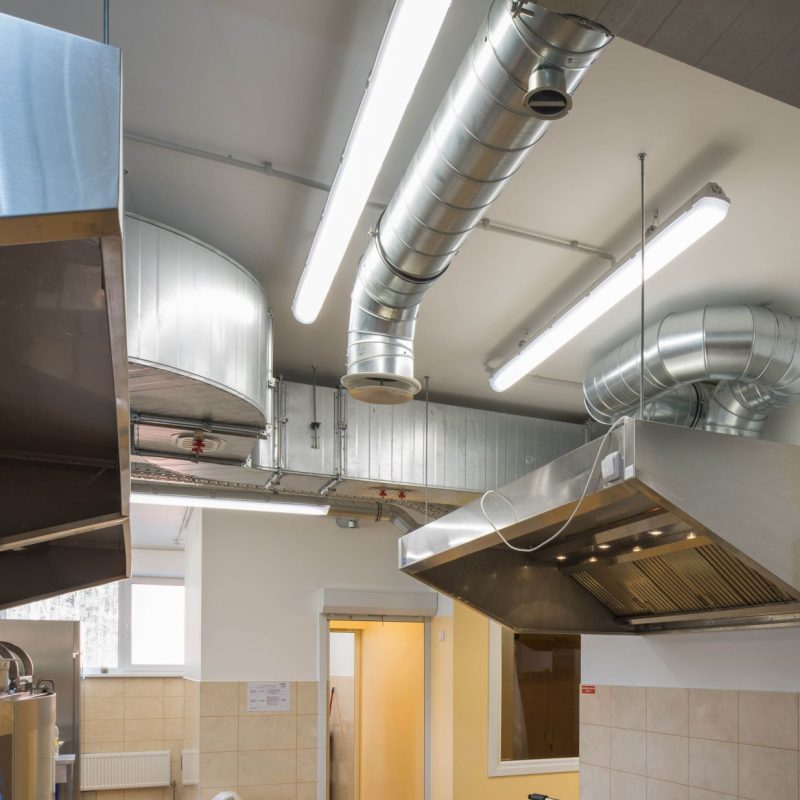
Today the company boasts offices around the UK, and a strong workforce to serve their impressive client base. Their services specialise in the inspection, cleaning and monitoring of HVAC systems, also focusing on water hygiene and Legionella prevention.
2002 saw the launch of the Midlands Division, now a Limited Company in its own right, headed by Paul Downing.
Having worked together on the HVCA’s Drafting Panel for TR/17 – Guide To Good Practice – The cleanliness of ventilation systems, both Gary Nicholls and Paul Downing welcomed the launch of TR/19 in May this year. Paul Downing said: “This new publication amalgamates DW/TM2 with TR/17. TR/19 will effectively become a “one stop shop” and eliminate confusion between designers, consultants, contractors and end users regarding standards of cleanliness on both existing ductwork and new installations”.
Exhibiting alongside the HVCA at the London HEVAR event on 5 & 6 October, Swiftclean intend to further promote this comprehensive industry guideline. Gary Nicholls said: “In the past there has been a distinct lack of clarity as to what the responsibilities and requirements have been in terms of ventilation ductwork cleanliness for new installations. This has often lead to contractual dispute and bad feeling between the instructing parties and those installing ductwork. If designers and specifiers use TR/19 to establish this missing clarity then it will be possible for new ventilation systems to begin operation in a clean condition rather than moderately dirty as is often the case. In comparison, it is unlikely that purchasers of new cars would accept them with 3,000 delivery miles on the clock, so why should purchasers of ventilation systems feel any different about the cleanliness of their newly installed ductwork system?”
Should you wish to visit Swiftclean at HEVAR, they will be exhibiting on stand number 46. Alternatively, call Swiftclean free on 0800 243 471, for an invitation to the show.
News: Experts warn over air health danger
By Matthew Dunckley (H&V News) March 20 2004
Air circulated around may UK buildings is considerably more polluted and harmful to health after going through mechanical ventilation than before, it has been claimed by leading experts.
Delegates at the Chartered Institute of Building Services Engineer’s (CIBSE) Indoor Air Quality seminar heard from leading academics that the problem stemmed from an alarming lack of cleaning and maintenance.
They added this put UK workers at risk from Sick Building Syndrome and cost the country millions in lost productivity. “Most of the cases of Sick Building Syndrome in the studies are in mechanical ventilation systems,” said Professor Olli Seppanen of the Helsinki University of Technology. “Air handling systems seem to be a major source of sensory air pollution in buildings”.
He quoted research showing that every component in the system including ducts, filters and coils seemed to generate pollution if left without maintenance.
Air pollution and poor ventilation could seriously affect worker productivity and lead to an alarming increase in absenteeism, he said.
His view was echoed by EPD principal energy consultant, Robert Cohen, who told H&V News that if systems were to be efficient they needed to be well designed and easily maintained which was not happening in the UK.
“As far as I’m aware clean ducts is not taken anywhere near as seriously in this country as it is in [for example] Scandinavia,” Dr Cohen said.
World famous expert, Professor Ole Fanger claimed that air passed through filters could come out more polluted rather than less. He warned of the dangers of not replacing filters frequently and called for continued research into new methods for removing particles from the air.
Commenting on the presentations, Glan Blake Thomas, managing director of air conditioning distributor Advanced Ergonomic Technologies, slammed the level of maintenance in the UK describing it as “scandalous”.
Mr Blake Thomas went on to say that maintenance of ductwork was a low priority for building owners and predicted that the problem would worsen in public buildings.
He blasted construction techniques that often resulted in contamination of ductwork from day one.
“No one wants to know until it all falls over,” he said. His views were endorsed by Advanced Engineering director, Andrew Botting, who said some building owners removed filters to increase air flow through ducts.
HVCA’s ventilation hygiene group chairman, Mr Gary Nicholls (M.D. of Swiftclean UK Ltd), told H&V News last week (H&V News, March 13) that building owners were tempted to ignore “out of sight, out of mind” problems associated with ductwork.
Associated of Ductwork Contractors and Allied Services secretary, Alan Weir, pointed to a burgeoning number of ductwork cleaning companies as proof that building owners and facilities managers were taking the issue seriously.
However, he warned that until design, cleaning and maintenance were covered by one et of British Standards, problems such as access to systems would persist.
He also rejected any suggestion of substandard workmanship during construction among ADGAS members, who followed best practice guides for installation
Manslaughter charges alarm engineers
The building services industry was stunned by the decision to prosecute an individual design services manager over the seven deaths caused by a Legionnaires’ disease outbreak in Cumbria.
The Crown Prosecution Services has pressed manslaughter charges against Barrow Borough Council and its employee Gillian Beckingham.
It is the first time that corporate manslaughter charges have been brought against a local authority. In the past, where individuals have been charged, they have invariably been senior managers or directors.
Mrs Beckingham faces seven charges of manslaughter after the disease, which affected 170 other people, was traced to an arts centre air conditioning unit in Barrow-in-Furness, Cumbria. The council faces seven counts of corporate manslaughter.
If convicted, Mrs Beckingham faces a maximum sentence of life imprisonment and the council an unlimited fine.
The outbreak was traced to a 30 year old air conditioning unit at the council operated Forum 28 arts complex in August 2002. It was discovered after the outbreak that the maintenance contract to clean the unit had been terminated.
Some local government officials say this will make employees less willing to take difficult technical decisions if they believe they could be left open to prosecution.
The institute of Directors (IOD), which last year backed the introduction of the offence of corporate manslaughter, said it was concerned about the danger of “scape-goating” individual managers. This could deter employees from volunteering for health and safety responsibilities, it said. Prosecutors will have to prove that Mrs Beckingham owed a duty of care to the victims; that there was negligence; that the breach was a substantial cause of death; and that the breach of duty was so gross that it was criminal.
HAC magazine – March/April 2004
For more information please contact us: Free phone 0800 243 471.